知识与财富的链接

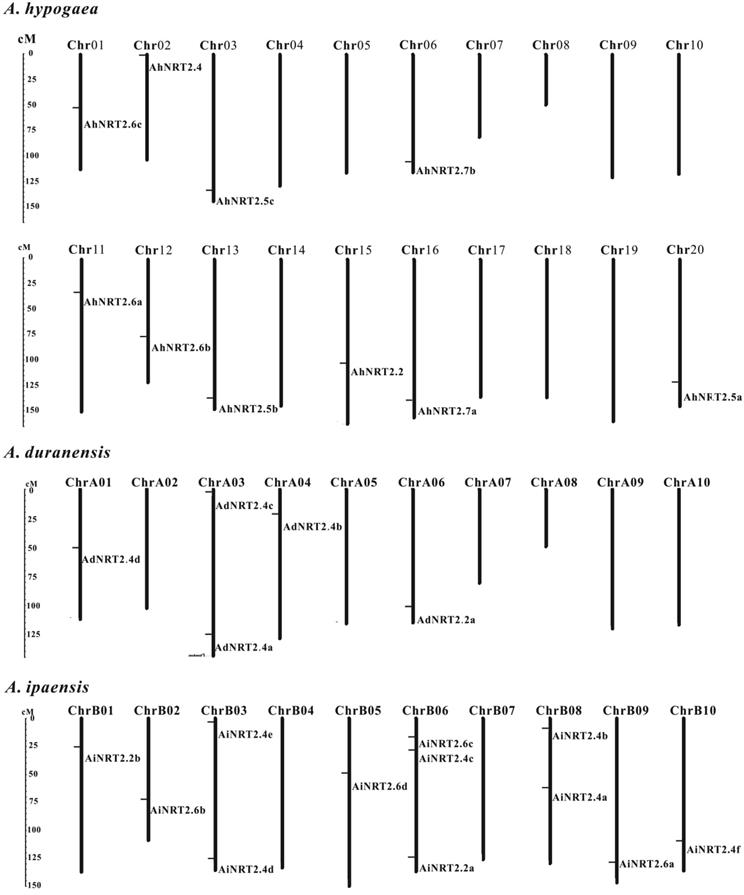
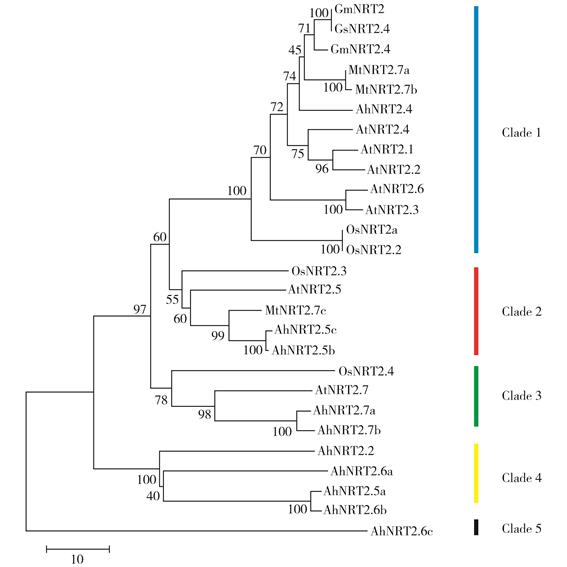
氮素利用效率(nitrogen utilization efficiency,NUE)是影响花生产量的重要因素之一。基于前期产量相关性状全基因组关联分析锚定到的一个候选基因,属于花生高亲和硝酸盐转运蛋白(nitrate transporter 2,NRT2)基因家族。本研究利用栽培种花生全基因组和不同组织的转录组信息,对NRT2家族成员进行了全基因组鉴定与表达模式分析。共鉴定到10个NRT2基因家族成员,染色体定位分析结果显示这些基因不均匀地分布在20条染色体上。其中,3号(AhNRT2.5c)和13号(AhNRT2.5b)染色体,6号(AhNRT2.7b)和16号(AhNRT2.7a)染色体上的基因成员存在同源关系。AhNRT2.4,AhNRT2.5a,AhNRT2.5b和AhNRT2.5c四个基因在根组织中表达量较高,表明这些NRT2基因在根系中发挥重要作用。该结果为进一步研究花生NRT2基因家族及在氮转运过程中的作用机制提供了理论依据。
Arachis hypogaea L. is one of the most important oilseed and cash crops. The nitrogen utilization efficiency (NUE) is an important factor of peanut yield. In previous study, a candidate gene related to peanut yield was identified, belonging to high-affinity nitrate transporter genes (NRT2) family. In this project, the conserved domain of NRT2 protein was used to obtain the members of the NRT2 gene family based on the whole genome and transcriptome of peanut database. The phylogenetic tree, physicochemical properties, chromosomal distribution, genetic structure, conserved domain and gene expression pattern from 22 tissues were analyzed. The results showed that a total of 10 family members of the peanut NRT2 gene were identified. Chromosomal location analysis showed that these members were unevenly distributed on the 20 chromosomes.
Genes located on chromosome 03 and chromosome 13, chromosome 06 and chromosome 16 had significant homology relationships. The expression pattern analysis indicated that the expression levels in tissues were different. Four genes, AhNRT2.4,AhNRT2.5a,AhNRT2.5b and AhNRT2.5c had higher expression in the root, which indicated the NRT2 members played important roles in root functions. This study provided the theoretical evidence for further revealing the function of NRT2 protein in peanut.