知识与财富的链接

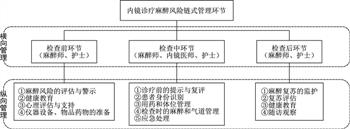
Objective A risk chain management scheme for integrated medical and nursing endoscopic diagnosis and treatment of anesthesia is constructed and clinically applied, and its influence on patients ' anesthesia adverse reactions, anxiety state and satisfaction is discussed. Methods A total of 300 patients treated at the Endoscopy Center of Wenzhou Central Hospital from April to June 2023 were selected as the control group, and 300 patients treated from July to September 2023 were selected as the intervention group. Patients in the control group underwent routine anesthesia management by anesthesiologists, while the intervention group implemented an integrated anesthesia risk chain management scheme based on the control group, including the establishment of an endoscopic anesthesia risk chain management team, the construction of the management scheme and the implementation of the scheme, and compared the incidence of anesthesia adverse reactions, anxiety scores and satisfaction with endoscopic anesthesia in the two groups. Results In terms of adverse reactions, the incidence of hypoxia, nausea and vomiting, cough and reflux aspiration in the intervention group was significantly lower than that in the control group, with statistical significance (P < 0.05). However, there was no significant difference in the incidence of arrhythmia and respiratory depression between the two groups (P > 0.05). In terms of anxiety scores, there was no statistically significant difference between the two groups before treatment (P > 0.05). After treatment, the anxiety scores of the two groups were significantly decreased (P < 0.01), however, the anxiety score of the intervention group (33.45±4.78) was lower than that of the control group (38.90±6.09), with statistical significance (F=15.290, P < 0.001). In terms of satisfaction, the satisfaction of patients in the intervention group was higher than that in the control group, and the difference was statistically significant (P < 0.01). Conclusion The integrated chain management scheme of medical care is conducive to reducing the occurrence of adverse anesthesia events in endoscopic diagnosis and treatment, reducing patients ' anxiety about endoscopic diagnosis and treatment, and improving their satisfaction.