知识与财富的链接

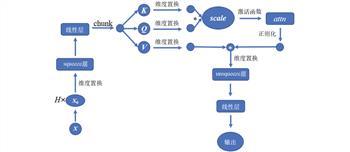
针对碳纤维复合材料(Carbon Fiber Reinforced Polymer, CFRP)蜂窝铝三明治结构,提出一种使用有限元仿真作为损伤数据来源,并基于改进后的深度学习模型对三明治结构冲击能量进行预测的方法。该方法在ResNet50主干网络的全局平均池化层之前引入一种多头注意力(Multi-Head Attention)模块,对卷积层提取的特征进行整合和筛选,使最终输入到全连接层中的特征向量更具有代表性。在RegNet主干网络的初始卷积层之后引入相同的注意力机制模块,使网络在早期就聚焦于图像中的关键区域和特征,增强底层特征的表达。研究结果表明:针对预测准确率,ResNet50网络最高达到93.7%, RegNet网络最高达到93.1%;在引入注意力模块之后,ResNet50网络能够达到98.9%, RegNet网络能够达到97.1%。2种改进的深度学习网络能够有效地预测出损伤图像中的冲击能量,为CFRP蜂窝铝三明治结构冲击能量的预测研究提供了一种新的参考。
This paper proposes a method using finite element simulations as a source of damage data and an improved deep learning model to predict the impact energy of carbon fiber reinforced polymer (CFRP) honeycomb aluminum sandwich structures. The method introduces a multi-head attention module in the ResNet50 backbone network before the global average pooling layer to integrate and filter the features extracted by the convolutional layers, making the feature vectors finally input into the fully connected layers more representative. The same attention mechanism module is introduced after the initial convolutional layer in the RegNet backbone network, enabling the network to focus on key regions and features in the images at early stage, thereby enhancing the expression of low-level features. Research results show that for prediction accuracy, the ResNet50 network reaches up to 93.7%, and the RegNet network reaches up to 93.
1%. After introducing the attention modules, the ResNet50 network can achieve 98.9%, and the RegNet network can achieve 97.1%. The two improved deep learning networks can effectively predict the impact energy of damage images, providing a new reference for the study of impact energy prediction in CFRP aluminum honeycomb sandwich structures.