 知识与财富的链接

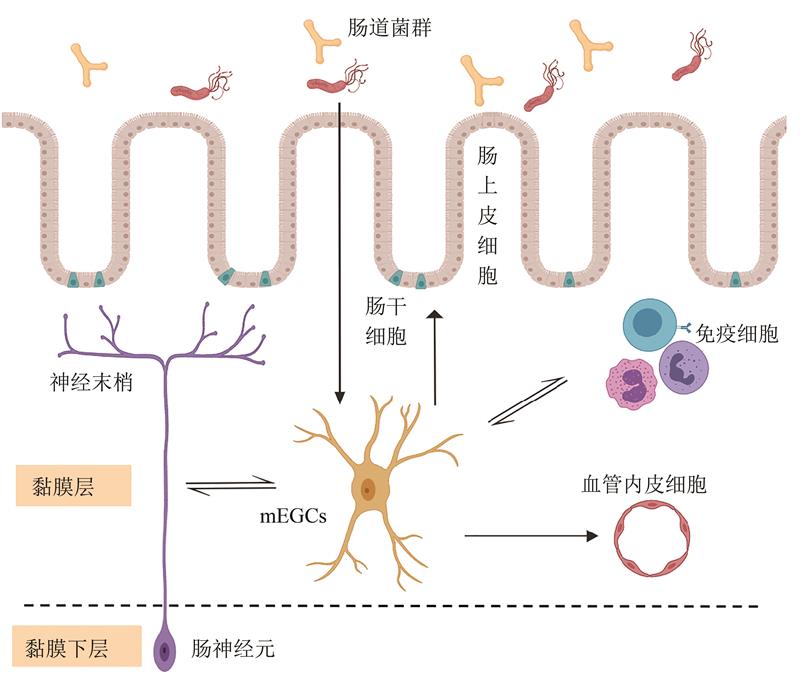
肠神经胶质细胞分布于消化道黏膜层、黏膜下层和肌层,其具有广泛的异质性和可塑性。黏膜层最靠近肠腔,易受病原体侵袭和炎症影响,因此黏膜稳态备受关注。肠黏膜神经胶质细胞(mucosal enteric glial cells,mEGCs)与肠上皮细胞、血管内皮细胞、免疫细胞等非神经元细胞具有复杂的相互作用关系。从结构和功能的角度来看,mEGCs可能处于中心调控位置。最近研究不断揭示m EGCs的亚型和新功能,表明mEGCs在病理条件下存在功能改变。了解mEGCs如何引起黏膜功能障碍及其在疾病发展中的作用至关重要。本文将总结mEGCs在维持粘膜内环境稳定和调节炎症方面的作用。
Enteric glial cells are distributed in the mucosa, submucosa and muscular layer of the digestive tract, and are characterized by extensive heterogeneity and plasticity. The mucosal layer is most close to the intestinal cavity and vulnerable to pathogen and inflammation, thus mucosal homeostasis has attracted much attention. Mucosal enteric glial cells (mEGCs) have complex interactions with intestinal epithelial cells, vascular endothelial cells, immune cells and other nonneuronal cells. From the perspective of structure and function, the intestinal glial cells may be in a central regulatory position. Recent studies have continuously revealed mEGCs subtypes and new functions, indicating that mEGCs has functional changes under pathological conditions. It is critical to understand how mEGCs cause mucosal dysfunction and their role in disease development. This article will summarize the role of mEGCs in maintaining mucosal homeostasis and regulating inflammation.