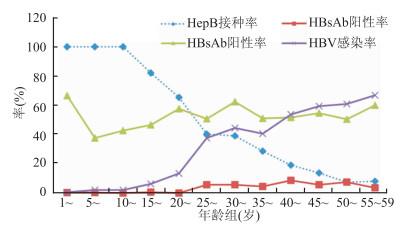
目的 了解马鞍山市现阶段人群乙肝流行和免疫状况,对比乙肝疫苗免疫策略调整后的防控效果。 方法 采用多阶段单纯随机抽样方法抽取马鞍山市10个调查点,按照城乡分层随机抽取3 460名60岁以下人群样本,开展问卷调查并采集静脉血标本,用国产酶联免疫吸附试验(enzyme linked immunosorbent assay,ELISA)试剂进行检测。 结果 乙肝病毒表面抗原(hepatitis B virus surface antigen,HBsAg)总阳性率为3.32%,乙肝病毒表面抗体(hepatitis B virus surface antibody,HBsAb)总阳性率为51.21%,乙肝病毒(hepatitis B virus,HBV)总感染率为29.16%。城市人群HBsAb阳性率高于农村(χ2=28.204,P<0.001)。医护人员HBsAb阳性率与其他职业人群间差异有统计学意义(χ2=22.772,P<0.001)。乙肝疫苗(hepatitis B vaccine,HepB)抗原含量调整前后儿童HBsAb阳性率差异有统计学意义(χ2=90.331,P<0.001)。HepB接种率随年龄增长呈下降趋势(χ趋势2=1 984.342,P<0.001)。 结论 自乙肝疫苗纳入免疫规划以来,马鞍山市适龄儿童乙肝防控工作取得成绩显著。学生人群HBsAb阳性率较低和成年人HepB接种率低应重点关注。
Objective To understand the current epidemic and immunity status of hepatitis B virus in Ma'anshan City, and to compare the prevention and control effect after the adjustment of hepatitis B vaccine immunization strategy. Methods Multi-stage random sampling method was used to select 10 investigation points in the whole city, a random sample of 3 460 people under 60 years old was included according to urban and rural stratification. questionnaires and blood were collected from the subjects, and domestic enzyme linked immunosorbent assay (ELISA) was used for hepatitis B immunoglobulins detection. Results The total positive rate of hepatitis B virus surface antigen (HBsAg), hepatitis B virus surface antibody (HBsAb) and Hepatitis B virus (HBV) infection was 3.32%, 51.21% and 29.16% respectively. The positive rate of HBsAb in urban area was higher than that in rural area (χ2=28.204, P<0.001). The positive rate of HBsAb was significantly different between the medical and nursing staff and other occupational groups (χ2=22.772, P<0.001). The difference of HBsAb positive rate before and after HepB vaccine content adjustment was statistically significant (χ2=90.331, P<0.001). The rate of HepB decreased with age (χtrend2=1 984.342, P<0.001). Conclusions Since HepB was incorporated into the immunization program, hepatitis B prevention and control in school-age children has achieved remarkable results. More attention should be paid on the low positive rate of HBsAb in students and the low immunization rate of HepB in adults.
 知识与财富的链接