知识与财富的链接

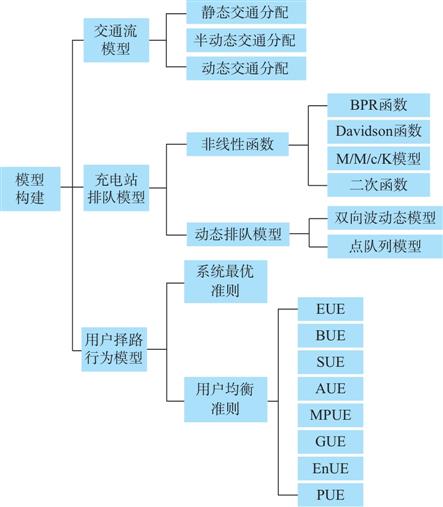
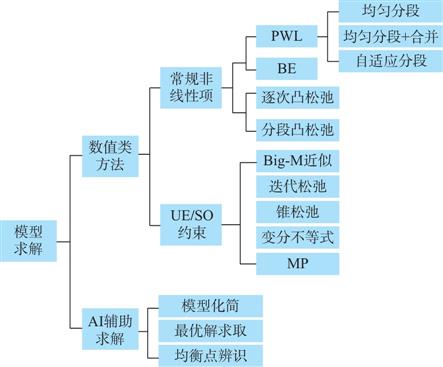
电动汽车渗透率的日益提升显著增强了城市交通网与配电网的耦合程度,促成电力-交通耦合系统的协同发展将有利于提升整体社会效益、促进多方共赢。电力-交通系统协同优化运行逐步受到了广泛关注,研究热度逐年提升。围绕该领域在模型层面和应用层面的4个关键科学问题——如何延拓基础模型以满足多元建模需求、如何实现对协同运行模型的高效求解、如何促成电力-交通系统多主体协同共赢、如何调控电力-交通系统中的灵活性资源,文中从模型构建、模型求解、多主体协同模式和调控手段4个角度对现有研究进行梳理和评述。从模型精细化、求解轻量化、场景多元化、协同可行化4个方面对后续研究方向进行展望。
The increasing penetration rate of electric vehicles has significantly enhanced the coupling degree between urban transportation networks and distribution networks, thereby promoting the coordinated development of the power-transportation system will be conducive to improving overall social benefits and promoting win-win situations for all parties. The coordinated optimization operation of the power-transportation system has gradually received widespread attention and the research enthusiasm has been increasing year by year.
Focusing on four key scientific questions in this field at both the model and application levels—how to extend the basic model to meet diverse modeling needs, how to achieve the efficient solution for coordinated operation models, how to facilitate a win-win collaboration among multiple entities in the power-transportation system, and how to regulate and control flexibility resources in the power-transportation system, this paper reviews and evaluates the existing research from four perspectives: model construction, model solving, multi-entity coordinated modes, and regulation and control methods. Prospects for further research directions to be carried out from four aspects: model refinement, solution lightweighting, scenario diversification, and collaborative feasibility.