知识与财富的链接

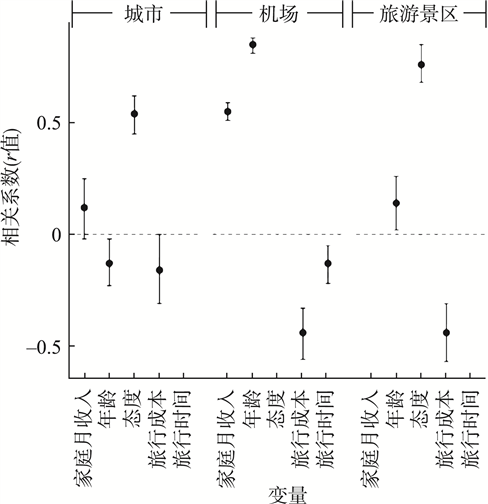
【目的】在全球气候变暖与能源结构转型迫切需求下,发展低空经济已成为推动交通领域绿色低碳转型的重要路径。电动垂直起降飞行器(eVTOL)作为低空交通的新型解决方案,其规模化应用需要系统解析其场景应用的“需求-技术”协同机制。但如何解构场景需求与技术供给的适配逻辑、精准识别市场偏好与技术瓶颈的交互机制,是值得关注的焦点。通过量化市场需求特征与技术供给趋势,可以为政策制定与产业布局提供理论支撑。【方法】根据场景需求与技术供给的适配逻辑,在需求侧,对截至2025年1月的eVTOL相关文献数据进行整合,采用Meta分析方法,检验乘客年龄、性别、态度、家庭月收入、旅行成本、旅行时间等变量对eVTOL吸引力的影响机制及场景调节效应;在供给侧,应用LDA(潜在狄利克雷分配)主题建模方法挖掘incoPat数据库中eVTOL相关的有效专利文本,识别技术主题演化规律。【结果】(1)在需求侧,就影响机制而言,乘客的态度与家庭月收入显著正向驱动eVTOL吸引力,旅行成本和时间则负向抑制eVTOL吸引力;就调节效应而言,场景类型调节效应显著:城市场景中乘客态度的影响最为敏感,机场场景中乘客年龄与家庭月收入的影响最为敏感,旅游景区场景中则是乘客的态度和旅行成本的影响最为敏感。(2)在供给侧,专利主题演化呈现三阶段特征——技术萌芽期聚焦城市场景全链路技术布局,技术深化期转向续航瓶颈的系统性突破,智能转型期侧重智能化纵深拓展。【结论】(1)eVTOL吸引力受乘客态度与家庭月收入的显著正向驱动及旅行成本与时间的负向抑制,且影响机制存在场景异质性——机场场景凸显时效溢价效应,旅游场景依赖体验价值驱动。(2)技术演进遵循“基础架构构建→续航瓶颈突破→智能系统深化”的递进规律,与场景需求形成协同演化。
[Objective] Under the urgent needs of global warming and energy structure transformation, the development of low-altitude economy has become an important path to promote the green and low-carbon transformation in the transportation sector. As a new solution for low-altitude traffic, the large-scale application of electric vertical take-off and landing vehicle (eVTOL) needs to systematically analyze the “demand-technology” coordination mechanism of its scene application. However, how to deconstruct the adaptation logic of scenario demand and technology supply, and accurately identify the interaction mechanism between market preference and technology bottleneck is the focus of attention. By quantifying the characteristics of market demand and the trend of technology supply, it can provide theoretical support for policy formulation and industrial layout. [Methods] This study conducted a meta-analysis of published eVTOL-related literature to examine the influence mechanisms of variables such as passenger age, gender, and attitude on eVTOL attractiveness and scenario-specific moderating effects. Latent Dirichlet allocation (LDA) topic modeling was applied to extract effective patent texts related to eVTOL from the incoPat database, identifying the evolutionary trends of technological topics. [Results] (1) On the demand side, in terms of the impact mechanism, passengers’ attitudes and family monthly income significantly positively drive eVTOL.
Attractiveness, travel cost and time negatively inhibit eVTOL attractiveness ; as far as the moderating effect is concerned, the influence of passenger attitude in urban scenes is the most sensitive. In the airport scene, the most obvious is the positive impact of passenger age and family monthly income. In the scenic spot scene, the influence of passengers’ attitude and travel cost is the most significant. (2) On the supply side, the evolution of patent topics demonstrated a three-stage pattern: the technology incubation stage focused on comprehensive technological deployment in urban scenarios, the technology deepening stage shifted toward systematic breakthroughs in endurance bottlenecks, and the intelligent transformation stage prioritized in-depth expansion of intelligent capabilities. [Conclusion] (1) eVTOL attractiveness is significantly and positively driven by attitude and income, yet negatively constrained by travel cost and time. The influence mechanisms exhibit scenario heterogeneity—airport scenarios highlight time-value premium effects, while tourism scenarios are primarily driven by experience value. (2) Technological evolution follows a progressive pattern of “basic architecture construction→endurance bottleneck breakthrough→intelligent system advancement,” demonstrating coordinated co-evolution with scenario demands.