知识与财富的链接

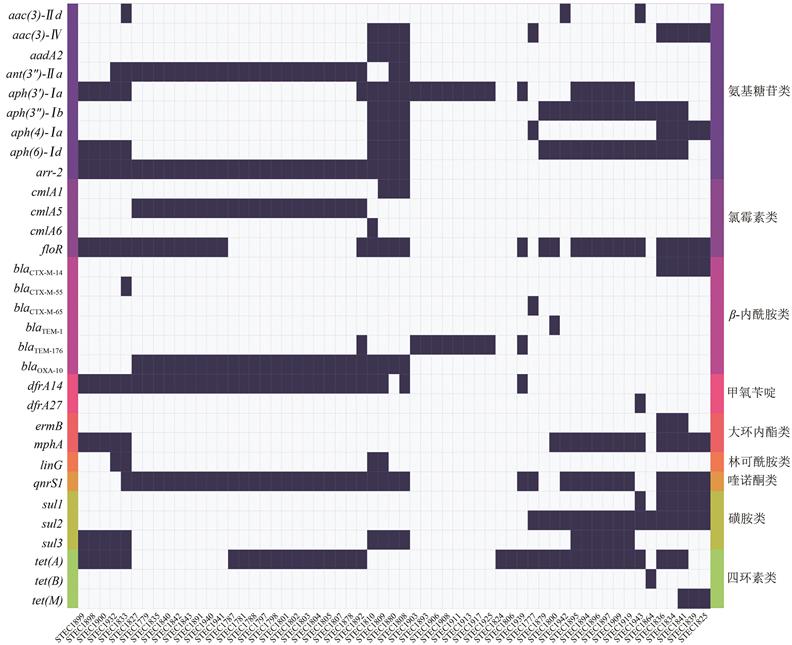
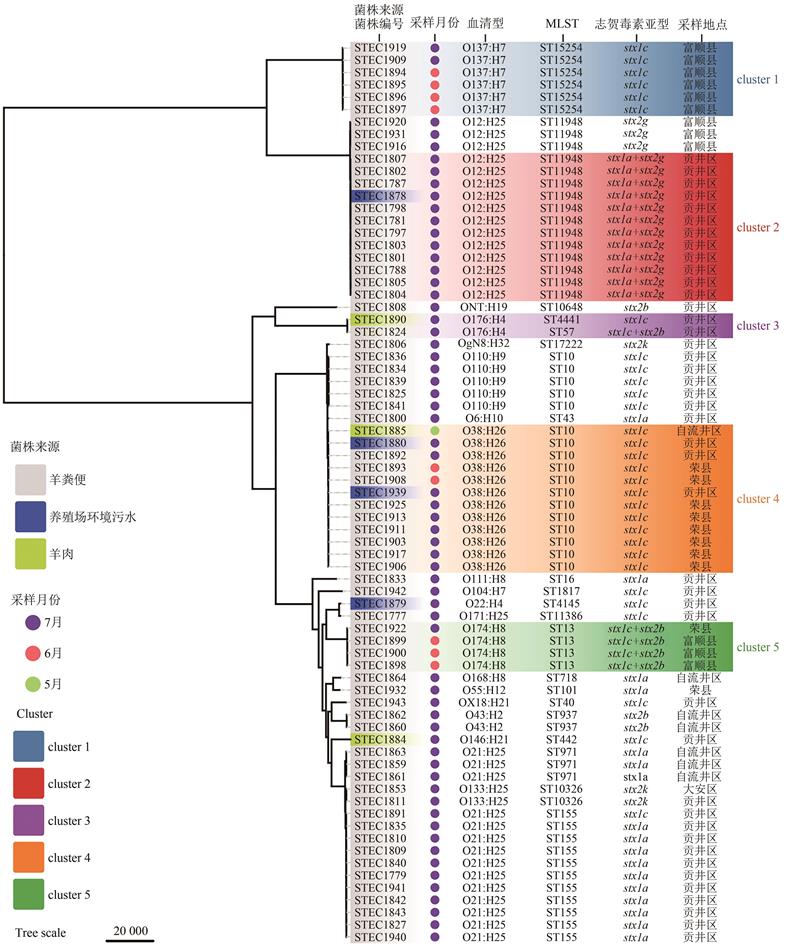
目的 了解四川省自贡地区山羊、养殖场环境及市售生羊肉携带产志贺毒素大肠埃希菌(STEC)情况和菌株分子特征,为STEC感染的风险评估、溯源调查及科学防控策略制定提供数据支持。方法 2024年5月至7月,采集自贡市四区两县养殖场山羊粪便、养殖场环境污水、市售生羊肉样品进行STEC分离培养,对分离菌株进行全基因组测序,基于菌株全基因序列进行多位点序列分型(MLST)、血清分型、志贺毒素分型、耐药基因分析以及核心基因组单核苷酸多态性(cgSNP)系统进化分析。结果 共采集样品466份,分离STEC菌株74株,其中山羊粪便67株(67/431,15.55%),环境污水4株(4/6,66.67%),生羊肉3株(3/29,10.34%)。74株STEC菌株可分为20种血清型、21种MLST型和5种志贺毒素亚型。64株(64/74,86.49%)分离株携带5种以上的耐药基因。cgSNP系统进化分析显示,血清型O38:H26、O12:H25的菌株在自贡不同地区山羊中持续存在,并与环境及生羊肉中的菌株具有高度遗传相关性。结论 自贡地区山羊STEC携带率高,菌株分子特征呈现多样性,存在山羊排菌污染环境及市售生羊肉的潜在传播途径,应关注其造成人感染的潜在风险。
Objective To investigate the prevalence and molecular characteristics of Shiga toxin-producing Escherichia coli (STEC) in goat’s feace, breeding environments, and retail raw mutton in Zigong, Sichuan Province, and to provide support for risk assessment, traceability investigation, and scientific prevention and control strategies for STEC infections.Methods Samples of goat feces, farm environment sewage, and retail raw mutton were collected from four districts and two counties in Zigong for STEC isolation. Whole genome sequencing was performed, and multilocus sequence typing (MLST), serotyping, Shiga toxin subtyping, antibiotic resistance genes were analyzed, and core genome single nucleotide polymorphism (cgSNP) phylogenetic analysis were conducted based on the whole genome sequences.Results From May to July 2024, a total of 466 samples were collected, and 74 STEC strains were isolated, including 67 from goat feces (67/431, 15.55%), 4 from environmental sewage (4/6, 66.67%), and 3 from raw mutton (3/29, 10.34%). The 74 STEC strains were classified into 20 different serotypes, 21 MLST types, and 5 Shiga toxin subtypes. Sixty-four (64/74, 86.49%) strains carried more than 5 antibiotic resistance genes. cgSNP phylogenetic analysis revealed that strains of serotypes O38:H26 and O12:H25 persisted in goats across different regions of Zigong and showed high genetic relatedness with strains from the environment and raw mutton.Conclusion The high carriage rate of STEC in goats in Zigong, along with the diverse molecular characteristics of the strains, indicates potential transmission pathways through environmental contamination and raw mutton. The potential risk of human infection should be closely monitored.