知识与财富的链接

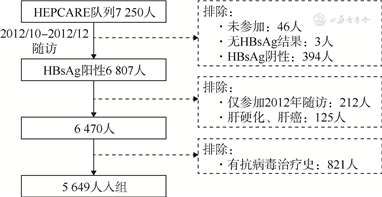
目的 明确社区来源慢性HBV感染者中HBsAg自然阴转发生情况及影响因素。方法 通过对无抗病毒治疗史的慢性HBV感染者5 649人进行长期随访,观察其HBsAg自然阴转发生情况,采用Fine-Gray竞争风险模型(F-G模型)进行HBsAg自然阴转的影响因素分析。结果 截至2023年随访结束,队列共随访48 144人年,发生HBsAg阴转707人,HBsAg阴转率为1.47/100人年。F-G模型分析结果显示,男性[亚分布风险比(sHR)=1.48,95%CI:1.21~1.81,P0.001]、年龄≥60岁(sHR=2.19,95%CI:1.21~3.95,P=0.009)、肥胖(sHR=1.38,95%CI:1.09~1.74,P=0.007)和HBV DNA阴性(sHR=7.42,95%CI:3.89~14.20,P0.001)的慢性HBV感染者HBsAg阴转可能性较高。HBV DNA水平缓慢下降、缓慢升高、明显升高者HBsAg阴转可能性低于明显下降者(均P0.05)。高正常ALT、反复波动者HBsAg阴转可能性低于持续低正常ALT者(均P0.001)。结论 慢性HBV感染者的HBsAg自然阴转率较低。在扩大抗病毒治疗的趋势下,可采用更为严格的ALT治疗阈值,并持续监测感染者的ALT水平和HBV DNA水平,以促进HBsAg阴转。
Objective To clarify the incidence and influencing factors of spontaneous HBsAg seroclearance in community-based chronic HBV-infected individuals. Methods A total of 5 649 individuals who had never received antiviral treatment were included in this long-term follow-up cohort study. A Fine-Gray competing risk model (F-G model) was used to estimate HBsAg seroclearance incidence and analyze the factors influencing spontaneous HBsAg seroclearance. Results By the end of 2023 follow-up, a total of 707 participants had achieved spontaneous HBsAg seroclearance in 48 144 person-years of follow-up with the seroclearance rate of 1.47/100 person-years. Analysis using the F-G model demonstrated a higher likelihood of HBsAg seroclearance among: males [sub-distribution hazard ratio (sHR)=1.48, 95%CI: 1.21-1.81, P0.001], individuals aged 60 years and above (sHR=2.19, 95%CI: 1.21-3.95, P=0.009), obese individuals (sHR=1.38, 95%CI: 1.09-1.74, P=0.007) and HBV DNA-negative individuals (sHR=7.42, 95%CI: 3.89-14.20, P0.001). Participants with slow decline, slow increase, or significant increase in HBV DNA level had a lower likelihood of HBsAg seroclearance compared to those with significant decline (all P0.05). Those with high-normal or fluctuating ALT had a lower likelihood of HBsAg seroclearance compared to those with persistently low-normal ALT (both P0.001). Conclusions The spontaneous HBsAg seroclearance rate in chronic HBV-infected individuals was relatively low. In the context of expanded antiviral treatment, more strict ALT treatment threshold can be adopted, and the ALT level and HBV DNA level should be continuously monitored to promote HBsAg seroclearance.