 知识与财富的链接

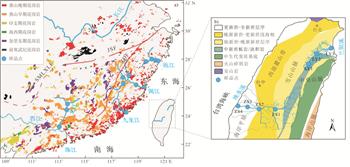
碎屑锆石年代学常被用于示踪物源、重建源区古地理以及揭示区域构造-沉积演化历史。分析和收集了台湾山溪性河流及大陆东南部中小河流的碎屑锆石U-Pb年龄,探究了山溪性中小河流碎屑锆石年代学的主要控制因素,及对东部海区沉积物源的示踪意义。河流碎屑锆石年龄组成与流域基岩性质比较研究揭示,大陆东南部中小河流碎屑锆石年代学与流域基岩所经历的构造-岩浆活动对应,而台湾山溪性小河流的碎屑锆石年代学与流域沉积岩的构造-沉积演化历史密切相关。中国东南部山溪性中小河流的碎屑锆石年龄组成揭示出三类不同的物源端元:(1)东南沿岸的小河流具有极高的燕山期锆石峰值;(2)东南部中等流域规模的河流以明显的加里东期锆石峰值为特征;(3)台湾西部山溪小河具有较高比例的前寒武纪锆石以及明显的晋宁期和吕梁期峰值年龄。这些物源端元特征的确立为今后示踪末次冰期阶段东海内陆架和台湾海峡的粗粒沉积物来源提供重要参考。
The detrital zircon geochronology is commonly applied to trace the sediment provenance, reconstruct the paleogeography, and reveal the tectono-sedimentary evolution history. Although zircon is an extremly tiny mineral (10-5~10-4m), it may provide geological information of such a large spatial scale (> 1010m2) as the India-Asia collision, the birth of the Yangtze River and the tecotono-sedimentary evolution of Taiwan Island. The aim of this study is to reveal the characteristics and controlling factors of the detrital zircon geochronology of mountainous rivers by comparing zircon U-Pb ages of river sands between two kinds of river basins drainning through different lithology (sedimentary rocks and igneous rocks) in southeastern China.