知识与财富的链接

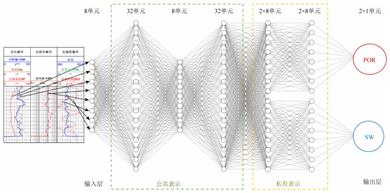
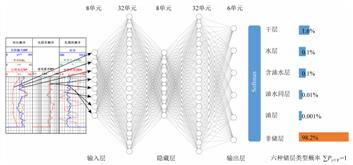
基于数据驱动机器学习的智能地球物理测井有望显著提高测井资料处理与解释的效率, 具有广阔的应用前景.但是, 数据驱动的测井反演如储层参数预测面临小样本、少标签和可解释性差等困难.通常, 人工解释实测数据集是测井机器学习标签的主要来源.由于井下油气储层复杂多样, 测井反演具有多解性,且地层具有非均质性, 实测数据集构建的标签体系不仅量少, 可靠性也存疑.本文提出基于地质领域知识和岩石物理机理模型, 通过正演模拟构建测井反问题机器学习数据集的方法.从地质约束出发, 综合考虑井眼环境、测井仪器、地层模型及流体分布等影响, 由测井领域知识正演生成测井数据以弥补实测数据集的不足, 以此实现机理模型与数据驱动的融合.数值实验结果表明, 正演生成的测井数据集有效扩充了样本和标签数量, 其参与储层参数预测及储层划分深度神经网络训练, 对发展数据驱动及数据与机理混合驱动的方法、提升测井储层评价参数预测模型效果, 成效显著.
Intelligent logging interpretation based on data-driven machine learning has promising prospects for significantly improving the efficiency of well logging data processing and interpretation. However, data-driven logging inversion, such as reservoir parameter prediction, faces challenges such as small sample size, limited labels, and poor interpretability. Typically, manually interpreted measured logging dataset is the main source of machine learning labels. Due to the complexity of subsurface fluid resources, the multiple solutions of logging inversion, and heterogeneity of formation, the reliability and quantity of labels constructed from measured data sets are questionable. This paper proposes a method for constructing machine learning datasets for logging inversion based on geological domain knowledge and petrophysical mechanism models by forward simulation. Starting from geological constraints, this method comprehensively considers the influences of borehole environment, logging instruments, formation models, and fluid distribution, logging data to generate logging dataset by forward simulation based on petrophysical domain knowledge. The model trained by generated dataset could achieve the fusion of mechanism model and data-driven approach. Numerical experiments show that the forward-synthesized well logging dataset effectively increases the sample and label quantity. By participating in the training of deep neural networks for the reservoir parameters prediction and reservoir fluid classification, it significantly improves the effectiveness of well logging reservoir parameter prediction models and promotes the development of data-driven and data-mechanism-driven methods of data and mechanism.