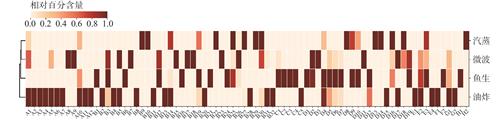
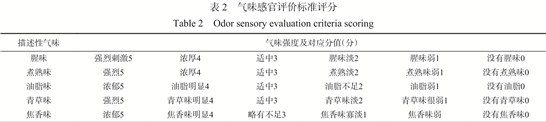
以草鱼肉为研究对象,通过气相色谱-质谱联用仪、电子鼻技术和感官评价分析不同烹饪方式(鱼生、微波、汽蒸和油炸)对草鱼肉挥发性风味成分的影响。气相色谱-质谱联用仪结果显示,4种烹饪方式下草鱼肉共检出78种挥发性风味物质,以烯烃类、烷烃类、醛类、酯类等挥发性物质为主,且油炸烹饪方式下的挥发性风味成分数量和含量高于其他处理组。电子鼻和主成分分析表明,与生鱼肉相比,汽蒸和微波烹饪方式下的鱼肉风味相距较近,油炸烹饪方式对鱼肉的风味影响较大。感官评价结果显示,油炸、汽蒸、微波烹饪方式下的鱼肉气味均带有一定的腥味、青草味,但油炸烹饪方式下的鱼肉风味主要表现在焦香味和油脂味,且鱼肉油炸时产生的反,反-2,4-癸二烯醛、2-呋喃甲醛、2-戊基呋喃等特有风味成分赋予鱼肉烤肉香,将鱼腥味、青草味等不愉快气味覆盖。综上所述,草鱼肉的挥发性风味物质主要以醛类、酯类化合物为主,且与生鱼肉相比,油炸烹饪方式对鱼肉的风味成分的影响最大,能更好地降低鱼肉的腥味物质,这为草鱼肉食用深加工技术的开发提供了理论依据。
The effects of different cooking methods (raw, microwave, steaming and frying) on the volatile components of Ctenopharyngodon idella were analyzed by gas chromatography-mass spectrometry, electronic nose technique and sensory evaluation. The results of gas chromatography-mass spectrometry showed that 78 volatiles were detected in 4 cooking methods, mainly olefin, alkanes, aldehydes, esters and other volatile compounds, and the number and content of components in frying methods were higher than those in other processing groups. The electronic nose and principal component analysis showed that, compared with raw fish, the volatiles of fish was closer between steaming and microwave, and fried one had a greater effect on the volatiles. The results of sensory evaluation showed that the fish smell in four treatments all had a certain fishy and grassy taste, but the fried one was mainly manifested in burnt and greasy taste. In addition, the special volatile compounds such as trans, trans-2,4-decenal, 2-furanaldehyde and 2-amyl furan produced during frying give the smell of roast meat, which could cover the off-odor such as fishy and grassy. In summary, the volatiles of Ctenopharyngodon idella were mainly aldehydes and esters, and compared with raw fish, frying had the greatest impact on the volatile components, which could better reduce the fishy off-flavor, the results would provide a theoretical basis for the development of deep processing technology for Ctenopharyngodon idella meat.
 知识与财富的链接