知识与财富的链接

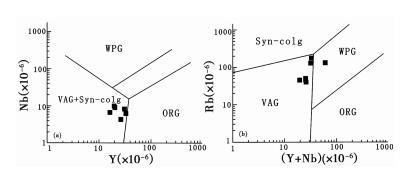
准噶尔盆地陆梁隆起南缘的滴南凸起地区广泛发育石炭系凝灰岩, 本文对滴南凸起滴西14井的石炭系流纹质凝灰岩的锆石SHRIMP年龄、地球化学与构造环境进行了系统研究。样品中锆石具有明显的振荡环带特征, SHRIMP锆石U-Pb年龄(337.2Ma)揭示该凝灰岩形成于早石炭世。火山岩样品具有较高的硅含量(SiO2=63.47%~77.36%), 低钛(TiO2=0.19%~1.01%)、钠(Na2O=0.98%~4.01%)、Mg#(21~53)的特点, K2O/Na2O比值为0.56~2.09, A/CNK大于1;稀土元素总量偏高, 具有明显的负铕异常, La/Nb比值介于1.71~3.74之间, 原始地幔标准化的蛛网图显示:大离子亲石元素Rb、Th、Ba等相对富集, 高场强元素Nb、Ta, 尤其是Sr、P、Ti负异常明显, 以上地球化学特征表明滴南凸起石炭系凝灰岩具有壳源特征, 为活动大陆边缘产物。且滴西14井岩性综合柱状图显示, 深部和浅部凝灰岩具有相似的地球化学特征, 浅部凝灰岩SiO2含量相对低于深部。结合火山岩锆石SHRIMP年龄和区域地质背景分析得出:盆地内陆东地区在早石炭世仍处于洋壳消减环境, 洋盆闭合时间不早于337.2Ma。克拉美丽-三个泉(陆梁隆起)-达尔布特代表的洋盆从早石炭世末期开始, 自东向西呈“剪刀式”闭合模式。石炭纪在准噶尔地区存在多岛格局, 从滴南凸起早石炭世火山岩的成因以及盆地周围地区的构造背景来看, 岛弧最终的相互拼贴可能构成了准噶尔盆地基底的主体。另外, 该区来自壳源的凝灰岩中并未见到老的继承性锆石, 表明准噶尔盆地可能不存在前寒武系基底。
Carboniferous tuff in the Di'nan uplift widely developed at the southern edge of the Luliang Uplift in Junggar Basin. This paper fully reports the Carboniferous tuff from Well Dixi-14 about the study of zircon SHRIMP U-Pb dating, geochemistry and tectonic environment. Zircon samples have obvious oscillatory zoning characteristics, and SHRIMP zircon U-Pb ages (337.2Ma) reveal that the tuff formed in Early Carboniferous. Volcanic rocks have the uniform characteristics with high SiO2 (63.47%~77.36%), low TiO2 (0.19%~1.01%), Na2O (0.98%~4.01%) content and Mg# value (21~53), and K2O/Na2O ratio range from 0.56 to 2.09, A/CNK>1.
Besides, ∑REE are relatively high, and the tuff has significant negative Eu anomalies, and La/Nb ratio has a range from 1.71 to 3.74. Trace element diagram standardized by primitive mantle are characterized that LILE (Rb, Th, Ba, etc.) is relatively enriched, while HFSE (Nb, Ta), particular Sr, P and Ti element is relatively depleted. Geochemical characteristics above show that Carboniferous tuff in the south side of Di'nan uplift have crust source characteristics, which demonstrates that the tuffs were the products of active continental margin. Furthermore, comprehensive stratigraphic column of Well Dixi-14 show that the deep and shallow tuff have similar geochemical characteristics, and shallow tuffs have relatively lower SiO2 content than deep ones. Combined with analysis from SHRIMP zircon U-Pb ages of volcanic rocks and the regional geological setting, we consider that the Ludong area was still in the subduction-related environment in Early Carboniferous, and the closure time of Kalameili ocean basin was no earlier than 337.2Ma. The ocean basin which represented by Kalamaili-San'gequan (Luliang Uplift)-Darbute tectonic belt showed a scissors-type closure model from east to west since Early Carboniferous, and lower volcanic rocks of Batamayineishan Formation were products of the Early Carboniferous arc magma, which supports the view that Junggar Basin have arc splicing basement. There existed a porential pattern of multi-island tectonic framework in Junggar area in Carboniferous. View from the genesis of Early Carboniferous volcanic rocks of Di'nan uplift and tectonic setting around the Junggar Basin, the arc-arc amalgamation may be the main body of basement of Junggar Basin. In addition, no old zircon has been discovered from these studied samples, suggesting that there may not exist the Precambrian basement in the Junggar Basin.